
Car transporter hire: A guide for moving vehicles safely
June 9, 2026
Moving vehicles safely requires more than simply loading them onto a truck and heading off. Vehicle weight, loading angles, licensing requirements, and transporter choice all play an important part in keeping transport safe and efficient. Car transporter hire gives businesses and private customers access to specialist vehicles without the cost and commitment of ownership.
From moving broken-down vehicles and transporting dealership stock to relocating commercial vehicles, choosing the right transporter can help prevent delays, reduce costs, limit risks, and make vehicle movement much easier.
Why choose car transporter hire?
If one of your recovery vehicles is off the road, or you have a sudden spike in demand that you can’t meet with your own vehicles, we’re ready to help.
It’s also an ideal solution for short-term needs, seasonal demand, or one-off transport jobs where flexibility matters. Private customers often hire car transporters for moving project cars, classic cars, auction purchases, motorsport vehicles, and non-running or damaged vehicles.
Some common uses for car transporter hire include:
- Recovery for broken down vehicles
- Transporting non-running vehicles
- Garage and workshop movements for customers vehicles
- Auction collections
- Moving dealership stock
- Bodyshop movements, courtesy car delivery and collecting damaged cars
- Delivering light commercial vehicles
- Transporting modified or prestige cars
Selecting the right vehicle for the right job
3.5t Beavertail
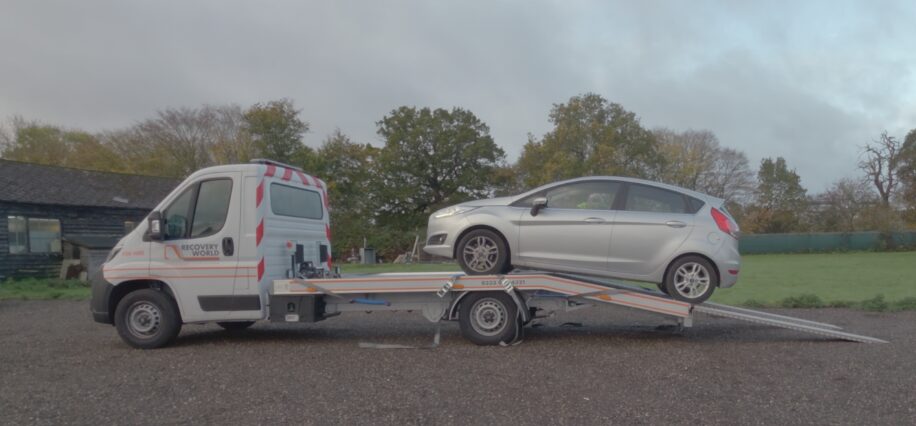
A 3.5 tonne beavertail is suitable for transporting cars and smaller vans. These transporters provide straightforward loading and are commonly used for vehicle recovery, dealership movements, auction collections, and general transport of smaller vehicles. They are great on fuel economy and very cost effective for moving vehicles around, these can also be supplied with hire insurance. These are regularly used by a lot of our business customers but also the public.
7.5t Slidebed Recovery Truck
A 7.5 tonne slidebed recovery truck offers higher payload capacity and easier loading for damaged or non-running vehicles. The sliding bed system allows vehicles to be winched onto the transporter and with the low loading angles, it is ideal for a wide range of vehicles from cars to light commercial vehicles.
7.5t Super Low Slidebed
Vehicles with low ground clearance can present loading challenges. A 7.5 tonne Super Low Slider reduces loading angles and lowers the risk of bumper, splitter, or underbody damage.
12t Slidebed Recovery Truck
A 12 tonne slidebed recovery truck is commonly used for larger commercial vehicles, heavier vans, loaded vehicles and specialist transport requirements where additional payload is needed.
12t Super Low Slidebed
Combining larger carrying capacity with reduced loading angles, these vehicles suit larger low-clearance vehicles and specialist transport work, for example long vans or motorhomes with long overhangs where ground clearance is an issue when loading.
15t Slidebed Recovery Truck
A 15 tonne slidebed recovery truck is suited to heavier commercial vehicle transport and larger recovery work where additional capacity is essential.
15t Super Low Slidebed
The 15 tonne super low slidebed combines substantial payload capacity with low loading angles, making it suitable for specialist vehicle transport and difficult loading conditions.
In addition to the vehicle 7.5t and above we also offer crew cabs which will facilitate carrying passengers.
For 7.5t and over we also offer the option of a second car lift (also known as a speclift) on the rear of the vehicle to tow a second casualty vehicle. This makes the journey even more efficient being able to move to 2 vehicles at a time or depending on the length of the body on the 15t vehicles, you can move 2 small vehicles on the body and one on the spec.
All 7.5t and above are for business customers only as they will need their own trade insurance for the vehicles, we cannot provide cover for commercial use and vehicles of this size.
Safety tips for car transporter hire
Safe vehicle transport starts before the vehicle is loaded. Following proper procedures helps reduce risks during loading, transport, and unloading, keeping you and other road users safe.
Check weight limits before loading
Always confirm the vehicle weight before loading. Greater vehicle weight adversely affects braking distances, stability, and handling. Overloading can also put the vehicle above the legal weight limit.
Consider the total vehicle weight, fuel load, accessories, cargo inside the vehicle, and any additional equipment being transported.
Load on level ground
Vehicles should be loaded on firm, level ground wherever possible. Uneven surfaces increase the risk of vehicle movement during loading and create poor loading angles that may affect platform contact or ground clearance.
Flat loading areas allow better control when positioning vehicles and make it easier to align ramps or slidebeds correctly. Loose gravel, mud, potholes, or sloped surfaces should be avoided as they can cause wheel slip or unstable loading conditions or damage to the equipment.
For heavier commercial vehicles, level loading becomes even more important because uneven weight distribution can place additional stress on securing points and loading equipment.
Secure the vehicle properly
Securing the vehicle correctly is one of the most important parts of safe transport. Every vehicle should be strapped drown with all four wheels secured using proper securing methods and the right equipment.
Wheel straps, axle straps, and tie-down systems should be tightened evenly to stop movement during braking, cornering, and acceleration.
Once secured:
- Handbrake on
- Check all straps are tight
- Confirm wheels cannot move
- Inspect securing points
- Recheck tension occasionally
Check route height restrictions
Height and weight considerations are often overlooked when hiring a car transporter. The loaded height of a transporter can increase significantly once a vehicle is onboard. Before travelling, calculate the total combined height and plan routes carefully.
Before setting off, and whilst on the road, check for:
- Low bridges
- Height restricted roads
- Overhead signs
- Low-hanging tree branches
- Weight restrictions
Understanding licence requirements for car transporter hire
Choosing the correct transporter also means ensuring the driver holds the correct licence.
A standard Category B car licence allows drivers to operate vehicles up to 3.5 tonnes.
For larger car transporters:
- 7.5 tonne recovery trucks require a Category C1 licence
- 12 tonne recovery trucks require a Category C licence
- 15 tonne recovery trucks require a Category C licence
Drivers operating recovery trucks professionally may also require Driver CPC qualification depending on vehicle use and operating circumstances.
Checking licence requirements before booking avoids delays and ensures vehicles are operated legally.
Equipment
All vehicles come with certified equipment, from the winches to the slidebeds and speclift, therefore, they can be made to meet the requirements of your work provider when used for business purposes.
Local recovery truck hire in Hertfordshire
Having access to local hire locations can make vehicle collection quicker and easier. With depots in Hatfield and Hoddesdon, customers can access recovery trucks, cars, vans, light commercial vehicles, minibuses, and HGVs. We also offer nationwide hire, and are able to deliver these vehicles across the country (delivery charges apply).
FAQs about recovery truck hire
What size vehicle can I drive on a standard UK driving licence?
A standard Category B licence allows you to drive vehicles up to 3,500kg Maximum Authorised Mass (3.5 tonnes). This includes 3.5t beavertail recovery trucks when operated within weight limits. Anything above 3.5t requires additional entitlement such as Category C1 or Category C.
Pre-1997 drivers: If you passed your standard car test before January 1, 1997, you likely already have “grandfather rights” and hold the C1 category on your licence automatically
What is the difference between a beavertail and a slidebed?
Beavertails use fixed loading ramps, while slidebeds tilt and slide backward to create easier loading angles with a full width platform. Slidebeds are often preferred for damaged or low-clearance vehicles and also easier to operate from using the levers as it hydraulic, as opposed to manual pull-out ramps.
Why do some jobs require a slidebed instead of a beavertail?
Slidebeds are used when loading angle is important. Vehicles with damage, low suspension, or non-functioning wheels often cannot be loaded safely on a fixed beavertail.
Which transporter is best for low vehicles?
Super low sliders are designed for vehicles with reduced ground clearance and help reduce damage during loading.
What should I check before I start loading a vehicle?
Before loading, confirm:
- Recovery vehicle is parked in a safe location
- Casualty vehicle is in neutral or ready for winching
- Brakes are released if required
- Steering is unlocked
- Ground conditions are stable and level
- Winch and straps are correctly attached and undamaged
These checks prevent damage during loading.
Ready to book your car transporter?
If you need reliable car transporter hire for vehicle recovery, transport, or collection work, our team can supply the right vehicle for the job from our Hertfordshire locations in Hatfield and Hoddesdon, we also deliver nationwide.
Speak to our friendly team to check availability, confirm licence requirements, and arrange the right transporter for your needs.